What’s New in Xero – November 2024


Welcome to our latest roundup of updates in Xero. Over the past two months, we’ve introduced features designed to save time, reduce errors, and provide greater flexibility for businesses and advisors. Let’s explore what’s new and how these updates can enhance your workflow.


Global Updates

Client Insights in Xero HQ and Practice Manager

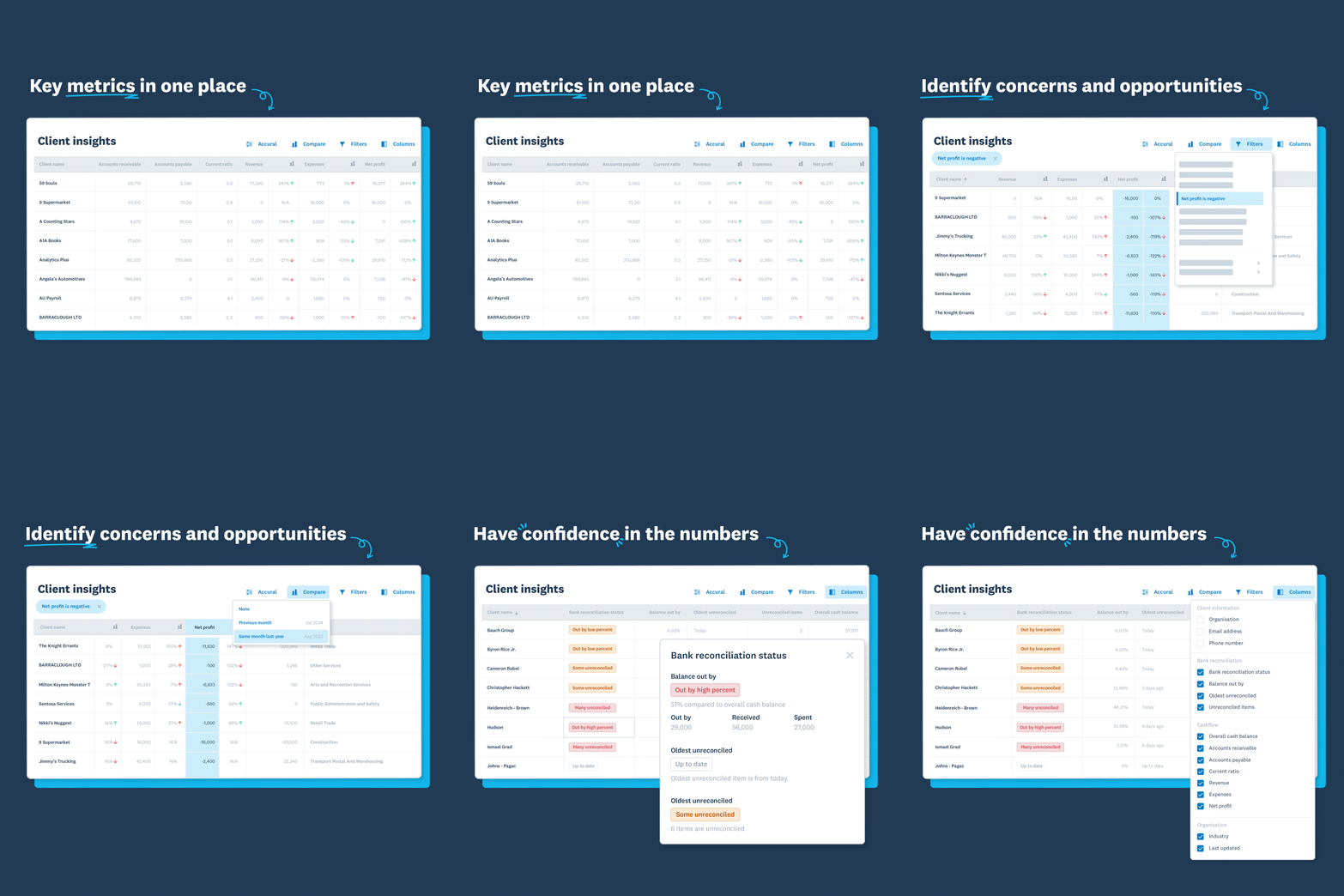
Xero partners now have access to the client insights screen in Xero HQ, with Xero Practice Manager integration on the way. This tool provides a snapshot of financial data for all business edition clients, helping you identify those who could benefit from advisory support or a timely discussion about their finances.

Xero Accounting App Enhancements

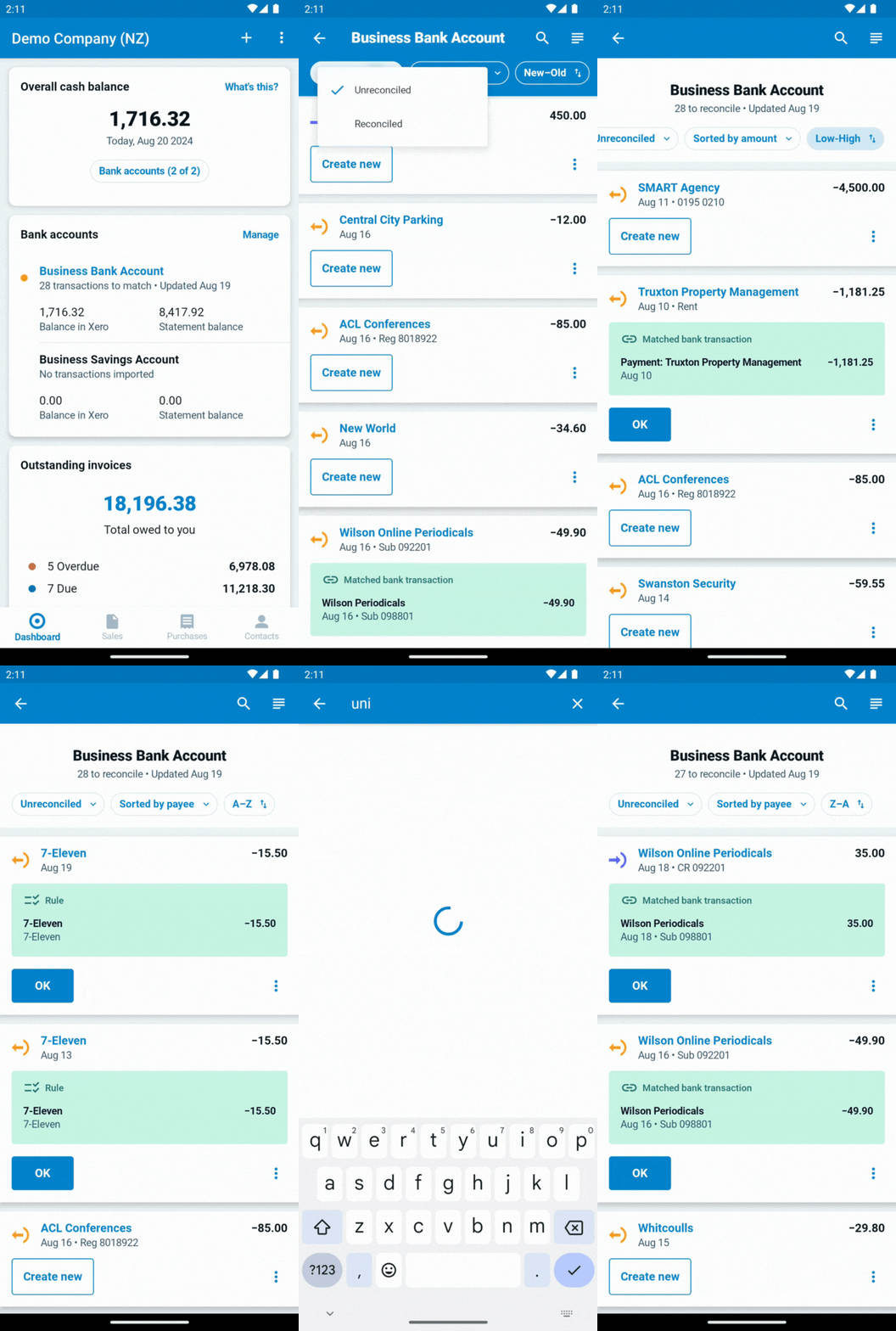
  • Users can now search, sort, and filter bank statement lines during the reconciliation process, making it easier to manage finances on the go.
  • Sharing invoices has been simplified for iPhone users. You can now send invoices via apps like Messages or WhatsApp with just a few taps, improving efficiency when you’re out and about.

Inventory Management Improvements

  • New filtering options in Xero Inventory allow you to distinguish between tracked and untracked items, and you can apply these filters to exports.
  • Exported files now include quantities, and you can customise columns and save these as default views. These updates make it more efficient to manage stock levels and ensure you have what you need on hand.

Report Layout Editor

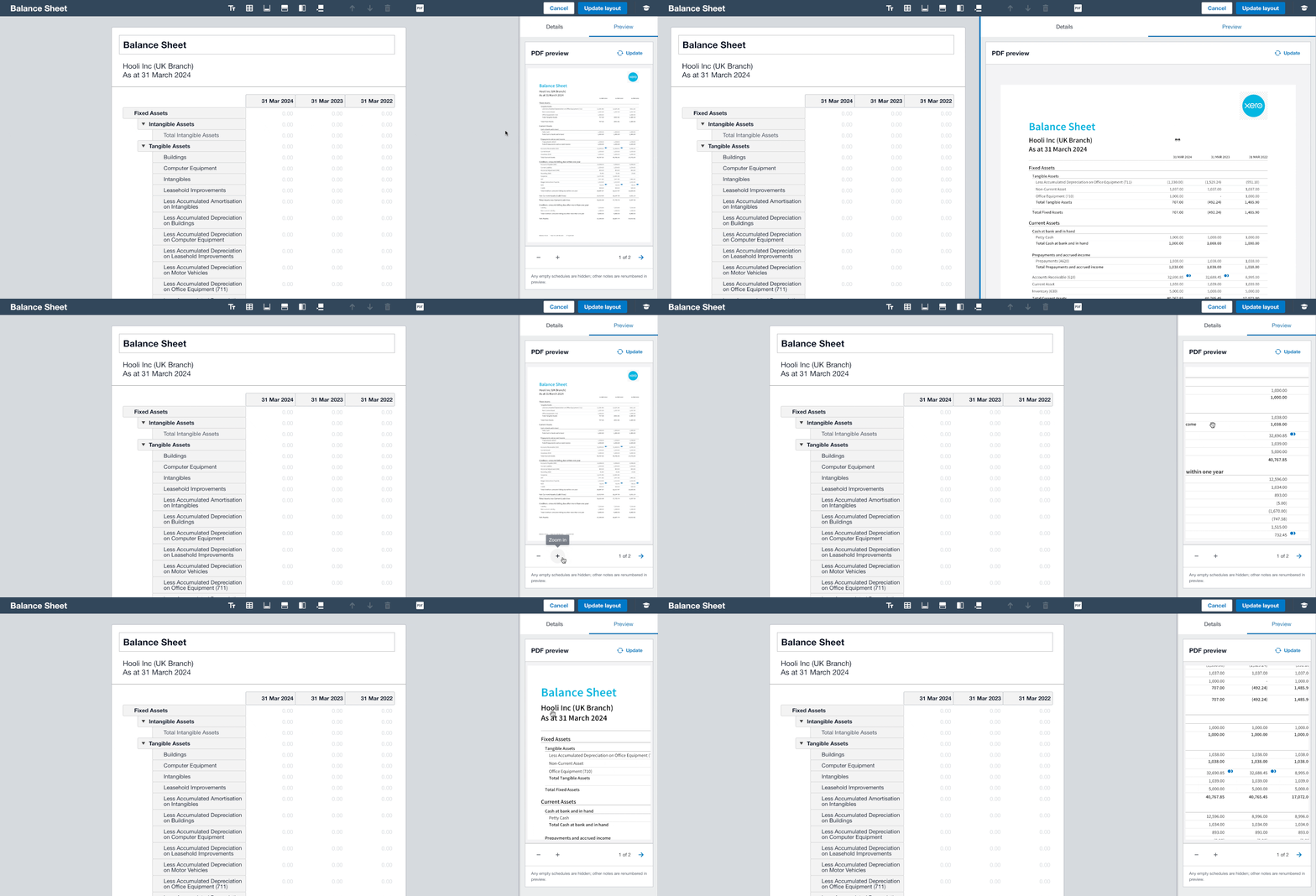
A new preview panel in the report layout editor helps you fine-tune report formats with ease, reducing the effort needed to customise your layouts.

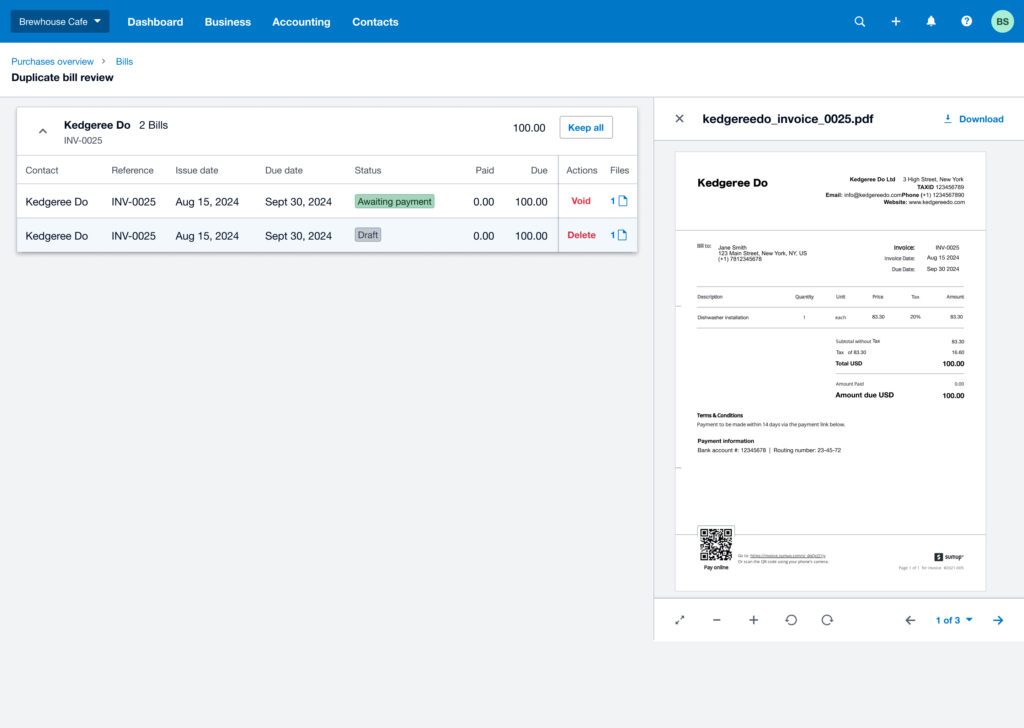
Duplicate Bill Detection

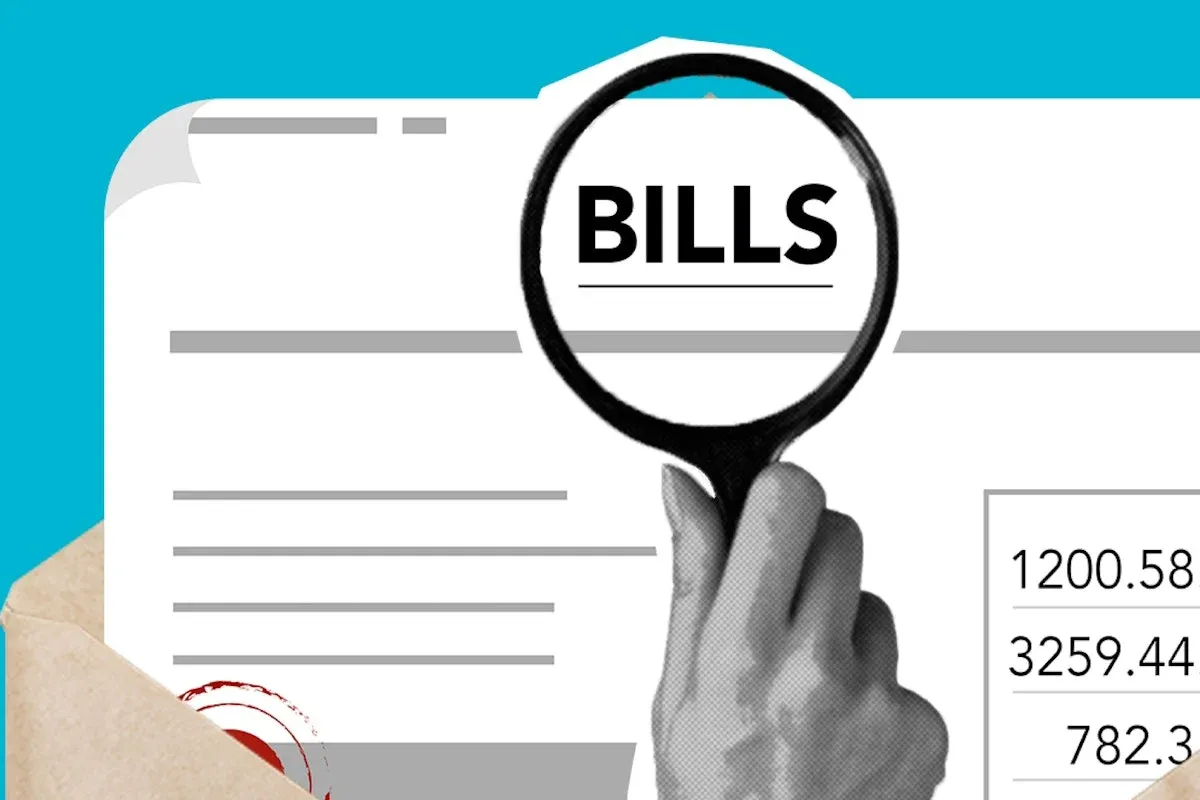
This eagerly anticipated feature alerts you to potential duplicate bills, regardless of how they were created, reducing overpayment risks and helping to avoid mistakes.

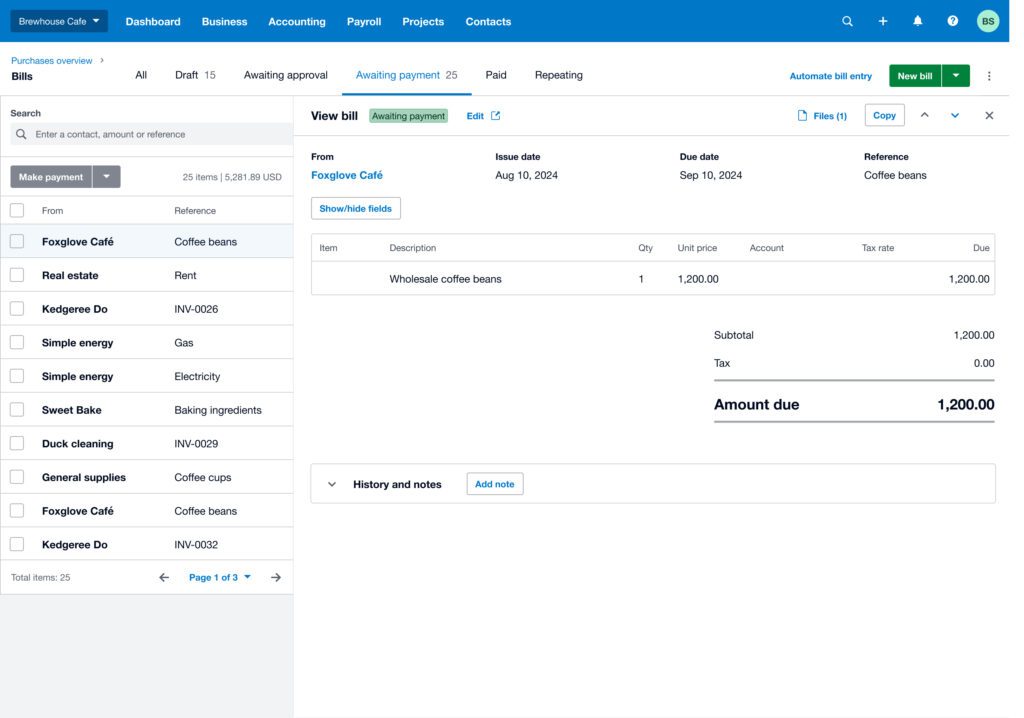
Streamlined Bill Reviews

A new quick-view option lets you view and approve bills directly from a single screen, saving time and eliminating the need to switch between multiple tabs.


Updates for New Zealand, UK, and Australia

Payment Checkout Without Invoices

Businesses can now create payment links to accept payments without needing to generate invoices. Simply share a payment link with your customers, track payments, and get paid quickly. No setup is required, but you’ll need to connect with a provider like Stripe, GoCardless, or PayPal.


These updates reflect Xero’s dedication to helping businesses and advisors succeed. Whether you’re improving inventory management, streamlining payment processes, or avoiding duplicate payments, these new features make it easier to run your business smoothly.

Slam the door on scammers

You keep your system firewalls current with regular updates and a switched-on IT provider. What about the human factor?

Scammers using social engineering can fool business owners and employees into revealing key business data. Just as people become wise to one technique, scammers develop another. They rely on people being friendly, helpful or naïve. Raise the subject regularly in team meetings to alert your team to scams and strategies to block them.

For instance, ‘pretexting’ is a scam where the scammer pretends to be a genuine contact to obtain sensitive data:

  • A caller says they’re from the business’ IT consultant and asks for login details because they’re doing ‘routine maintenance’ and need remote access
  • An official-looking announcement appears on the bulletin board saying the number for the help desk has changed. When employees call for help, a call centre asks for passwords and IDs, gaining access to the company’s data
  • A contact comes through social media as a prospect interested in what the business offers, lulling you into revealing sensitive information
  • The friendly new reps for one of your suppliers turn up at reception with morning tea for the team and cheerful questions about your business operations and assets

Run scenarios with your team. Learn to take a minute. Think. Who do you call to verify the contact is genuine? Your in-house IT Manager, your IT consultant or your General Manager? Put procedures in place to safeguard what information is given out, when and to whom.

Putting some structure into your business

Organisational structure is not top of mind for most business owners. Small businesses do well with flat structures. The team deals directly with the owner. There’s a friendly, informal, ‘just get on with it’ feel. With growth, change may be needed.

Hierarchical structures can have negative connotations, suggesting unnecessary bureaucracy, oppressive to people who work in them, frustrating to customers. But the right structure can improve morale, productivity and overall business success. It can be a pragmatic solution when a business is growing and suddenly the team (and you) can’t keep everything in their heads any more. It’s possible to create structure, with individual roles and responsibilities, and still encourage employees to express ideas freely.

Aim for

  1. A guideline for employees to understand where they fit and what needs to be achieved.
  2. Good communication flow; knowing the right person in each section to connect with to solve problems.

Avoid

  1. Environments where employees feel a lack of power or devalued.
  2. Stifled creativity when those at the bottom of the pecking order lack confidence to come forward with new ideas and approaches.

What should you do?

  • Involve your team.
  • Let them know why you want to change the current structure.
  • Seek their views. What works? What doesn’t?
  • Whiteboard the major processes to identify bottlenecks and where the business would benefit from better systems e.g. a ticketing system for repairs and complaints.
  • Talk through options.
  • Hold regular meetings to support innovation and strengthen the company culture.

Cut your energy usage while also cutting operating costs

One of the inescapable realities of running a small business is your impact on the environment. The carbon footprint of your delivery vans, the effect of your packaging on the natural world, or the amount of energy you consume as a company all add up over time.

The good news is that the Energy Efficiency & Conservation Authority (EECA) is making it easier for your small business to navigate energy efficiency and renewable energy sources

The EECA’s goal is to move Aotearoa towards a sustainable energy system that supports the wellbeing of current and future generations. And your small business has a part to play in this switch to a more sustainable and low-energy approach to doing business.

By following the EECA’s guidelines and making the most of the available schemes, you can radically reduce your company’s energy usage.

Becoming a greener business has a number of benefits:

Cost savings

Reduce your operating costs by becoming more energy efficient and switching to greener fuels and power sources within the business.

Social license

Becoming a more sustainable enterprise helps to improve your reputation with socially responsible consumers and investors.

Brand value

You can tap into new markets, spark innovation and create business opportunities by looking for new, more fuel-efficient and sustainable ways to trade.

Employee engagement

It’s easier to attract and retain top talent when you’re seen as a progressive and forward-thinking place to work.Compliance – keeping at the cutting edge of sustainability and green issues helps your business stay ahead of regulation for climate change mitigation.

Doing your bit for Mother Nature is the ultimate goal of being a green, responsible and sustainable business. But there’s also the added bonus of the potential cost-savings.

Talk to us about your plans for reducing energy consumption, switching to green fuels and cutting down on plastic usage. We’ll help you formulate a strategy that keeps you green, but also boosts your cost-cutting and cashflow aims.

Small Business Directories for NZ Trade Businesses

For Kiwi trade businesses looking to expand their reach, this article highlights the importance of listing on small business directories.

It details several directories, including NoCowboysTradeMe Services, and Builderscrack, explaining how these platforms can help improve online presence, reputation, and customer trust.

Discover the benefits of broader exposure through small business directories, like increased enquiries and opportunities for growth.

It also touches on managing business growth with tools like Tradify, suggesting it’s a smart move for tradespeople aiming for more visibility and work.

5 ways to reduce your stress as a business owner.

Small and medium-sized enterprises (SMEs) make up 97% of all businesses in New Zealand. As the owner of an SME, you’re doing your bit to provide employment, aid the economy and put Aotearoa on the map in an increasingly globalised world.

But running your own business can be incredibly stressful!

New research from RFI Global research, commissioned by Prospa, shows that seven in ten New Zealand SMEs are feeling stressed and burnt out. On the whole, this stress comes down to economic pressures, cashflow worries and the time commitments of being an owner.

So, what can you do to remove some of the pressure and avoid business burnout?

Practical ways to ease your business stress

Let’s look at some simple ways to bring those anxiety and stress levels down:

Ease those financial worries – you can’t change external factors like the economy, but you can get deeper into cashflow forecasting, spend management and cost-cutting exercises to put your cashflow and revenue in a more positive position.

Look for a business mentor

Partnering with an experienced business mentor can work wonders for both your business knowledge and your mental health. Mentors can share their experiences of the lean times, and what they did to overcome the challenges.

Take time away from the business

You can’t have your business brain turned on 24/7. Schedule time away from the business to improve your work/life balance. Time away can be hugely beneficial, allowing you to come back refreshed and motivated.

Focus on your own health and wellbeing

The long hours of running a business are not always conducive to healthy living, both for your physical and mental health. Try to eat and drink healthily, and also make time for exercise, social activities and a greater focus on relaxation, mindfulness and your personal wellbeing.

Work closely with your accountant

You don’t have to shoulder those cashflow worries alone! We can work closely with you to keep your cashflow in a more positive position, while also providing wider financial, advisory and business support.

Talk to us about about dialling down those stress levels

To run a healthy business, you need to be fit, healthy and in a good place personally. Constantly pushing yourself can quickly lead to burnout – and that’s a recipe for disaster!

We understand the pressure you can feel as a business owner.

So, we’re here to help take on some of the load, whether it’s strategic business advice, cashflow forecasting or introducing you to the right mentor from our business networks.

Farming of the future

Digitisation is transforming how farming businesses operate, leading to more innovation, efficiency, and productivity across New Zealand.

The Internet of Things (IoT) is part of the puzzle, local networks of internet-connected devices and appliances that share information. IoT devices make life more efficient, safer, and productive on-site.

IoT is changing how farmers and growers use land and track their stock, assets, and equipment. Many New Zealand farmers already use IoT solutions such as sensors, deployed across a farm to measure anything from soil moisture to fuel levels. Sensors can send alerts when valuable equipment is taken off-site, when a pipe is leaking, or locate a lost quad bike. They can also notify fuel suppliers when diesel or petrol tanks are low.

IoT devices also have huge health and safety benefits. Sensors can be attached to tractors and heavy equipment to send instant notifications in the event of an accident.

IoT solutions can automate tasks and give you more data to make better decisions. As a farmer or grower, you’ll gain more visibility over your business with a host of sensors and devices feeding information to your mobile phone or computer.

Companies including Levno offer water, fuel, and milk vat monitoring services through IoT-enabled sensors and devices. These provide real-time information on fuel and water management, feed monitoring, and milk processing.

New Zealand rural broadband providers, including Spark and Farmside, offer advice on how to get started with IoT. Get in touch with your internet provider to find out more.

6 Powerful Reasons To Watch Your Financial Reports

Making time to look over your financial reports each month is an important task for any business owner. If you are not taking time to do this, either because you’re too busy, or perhaps you don’t really understand what you’re looking at and it doesn’t make sense to you, then here are 6 reasons we recommend you should start to.

But before we get our 6 reasons, let’s talk very quickly about which reports to look at. At a bare minimum, and depending on the complexity of your business, you should be looking at the following:

  • – The Statement of Financial Performance – also known as the Profit and Loss report (P&L) or the Income Statement – tells you, as the name suggests, how your business is performing over a period of time, such as a month or a financial year. In broad terms it shows the revenue that your business has generated, less the expenses for that same period. In other words, it shows how profitable your business is.
  • – The Statement of Financial Position – also known as the Balance Sheet shows the value of the business’s Assets, Liabilities and Equity.
    – Assets include things like money in bank accounts, Plant and Equipment, Accounts Receivable balances
    – Liabilities include things like Bank loans and credit cards, Accounts Payable, and Hire Purchase balances
    – Equity is the difference between your Assets and your Liabilities and includes Retained Earnings and Owner Funds Introduced
  • – Accounts Receivable Ageing report (Aged Receivables) – this shows how much money is still owed to the business as at a certain date in time, and is usually segmented as to how overdue they are, or sometimes by how far past the invoice date they are. Generally, you will have Current, 30, 60 and 90 days columns.
  • – Accounts Payable Ageing Report (Aged Payables) – this report shows who the business owes money to as at a certain date in time and, like the Accounts Receivable Ageing report, is usually segmented by overdue period.


So why bother?


  • – Understand your business better – by looking at your Profit and Loss report monthly you will get a good picture of how your business is performing month by month and it gives you a better understanding of what makes up your profit. It can be helpful to compare periods, or to look at a month by month P&L, so you can clearly see on one page the revenue and expenses month by month. This also helps identify trends in your data and many also help to highlight anomalies in coding/categorising or unusual expenses or earnings.
  • – Accurate information for lending purposes – If you are applying for a loan or an overdraft, the bank or financial institution will look closely at both your Profit and Loss report and the Balance Sheet as a lot can be learned about a business by looking at these reports together. If you are unsure what some of your balances are in your accounts, get in touch and we can explain them further.
  • – Get paid quicker and reduce bad debts – by looking at your Accounts Receivable Aged Summary each month you can follow up with overdue accounts promptly which often results in getting paid quicker. The longer an overdue amount is left unpaid the higher the risk of it not being paid at all, so it is important to keep on top of this.
  • – Better relationships with your suppliers – Assuming you are entering your supplier bills into your accounting software (recommended for most businesses to get an accurate profitability figure) your Aged Payables report will alert you to any unpaid or overdue amounts. Supplier relationships are an important aspect of your business and paying on time is crucial to maintaining those relationships.
  • – Better cashflow – having an accurate understanding of how much money the business is owed, and how much money the business owes, can help with cashflow planning to ensure that there is enough money when needed. Additionally, understanding the trends of your business, its profitability drivers, its expenses, etc., can help to plan sales and marketing campaigns so that the revenue keeps coming in.
  • – Better business decision making – Your financial reports tell the story of your business and it’s important that you understand the story that they are telling you. The better you understand what’s going on in your business the stronger position you will be in to make better business decisions that affect the profitability of your business and its financial viability.
    If you would like to know which reports are relevant to your business, and you want to better understand what’s going on in your business, then get in touch so we can make a time to go through them with you.

Your business success is important to us and we are here to help you.

Work vehicles? Stay on top of tax with logbooks

Logbooks are useful records of business expenses relating to work vehicles and this is important when calculating what tax deductions you can claim. Depending on your business entity type, different tax rules apply when you use motor vehicles to earn income, and you might use a logbook to track expenses in different ways.

Sole traders and partnerships can claim income tax deductions for motor vehicle expenses if the vehicle is used to help earn income for the business. If you don’t use the vehicle exclusively for business, you can’t claim 100% of vehicle expenses. You need to work out the business use of the motor vehicle to calculate what deduction you can claim. You can do this either by using a logbook to track actual costs or using a logbook over a test period to establish the average business usage.

Companies are a bit different. Where company vehicles are used partly to earn income and partly for private use, vehicle costs associated with private use are liable for FBT. Companies can use logbooks to keep track of work-related costs and show either that the vehicles are work-related vehicles which don’t attract FBT where used for work purposes only, or that FBT is accounted for correctly where there is some private use of other vehicles. The logbook becomes a record of work-related use and of private use subject to FBT. Where a company restricts private use of the vehicle, a logbook is used as evidence that employees have complied with the restriction.

Whatever type of business structure you have, we can advise you on keeping good records and understanding what you can claim.

DOWNLOAD THE GUIDE TO MOTOR VEHICLE USE AND LOGBOOKS

Review your business expenses – and save

Review your business expenses – and save

Running a business costs money. There are always costs, overheads and supplier bills that mount up – and these expenses will gradually chip away at your cash position, making it more difficult to grow and make a profit.

So, what can you do to reduce your spend levels? And what impact will this have on your overall margins, profits and ability to fund the next stage in your business journey?

Getting proactive with your spend management

Spend management is all about getting in control of your expenses – and, where possible, aiming to reduce the level of costs and overheads that you incur as a company.

Excessive spending eats into your cashflow, reduces your profit margins and stops you from achieving the profits that you’re capable of as a business. So if you can get proactive with your spend management, you can actually make your company a far more financially productive enterprise – and that’s great for your overall business health.

So, what can you do to reduce spend and slim down your company expenses?

Here are some key ways to reduce expenses:

  • Reduce your overheads – your overheads are the unavoidable costs of running your business, producing your products or supplying your services. If you have bricks and mortar premises, these overheads will include rental payments, utility bills and the cost of paying your staff. Drill down into the numbers and see where there are opportunities to reduce these overhead costs. That could mean moving to smaller premises, or reducing the size of your workforce, to reduce payroll expenditure.
  • Put limits on staff expenses – if your employees can claim expenses, or buy raw materials and equipment with the company’s money, these costs can soon start to rack up. It’s a good idea to put a spending limit in place, so each staff member can only spend up to an agreed amount. Having a clear expenses policy helps, as will training up your staff in good spend management techniques. Expenses cards or expense management software will allow you to quickly set spend limits, track expenses and pull your expenses data through to your cloud accounting platform for processing.
  • Look for cheaper suppliers – if you can reduce your supplier costs, this will go a long way to bringing down your overall spend. If you’ve been with certain key suppliers for years, look around for new quotes, look at current market prices and see if you can negotiate better deals. And if your old suppliers aren’t flexible enough, try swapping to newer, more eager suppliers who will be willing to meet you in the middle on price.
  • Make your operations leaner – the bigger your operational costs are, the less margin you’ll make on your end products and services. One way to resolve this is to aim for a ‘lean approach’, paring back your staff, resources and operational complexity to the bare minimum. By making the business as lean as possible, whilst still delivering the same output, you keep your revenue stable, but reduce the spend level that’s eating into your cost of goods sold (COGS). The smaller your COGS, the more profit you make on each unit or sale – and that means better cashflow, more working capital and bigger profits.
  • Explore tax reliefs – you might assume that tax costs are an unavoidable expense when running your business, but it’s worth exploring which tax reliefs, grants or other business benefits you may benefit from. For example, research and development (R&D) tax credits that help cut your corporation tax expenses if you can demonstrate that you’re involved in innovation and ground-breaking R&D within your industry or specialism.

Talk to us about improving your spend management

If you’d like to get in control of your expenses, we’d love to chat. We’ll review your current costs and will highlight the key areas where expenses can be cut. Then we’ll help you formulate a proactive spend management programme, to reduce your unnecessary spending.


Contact Us